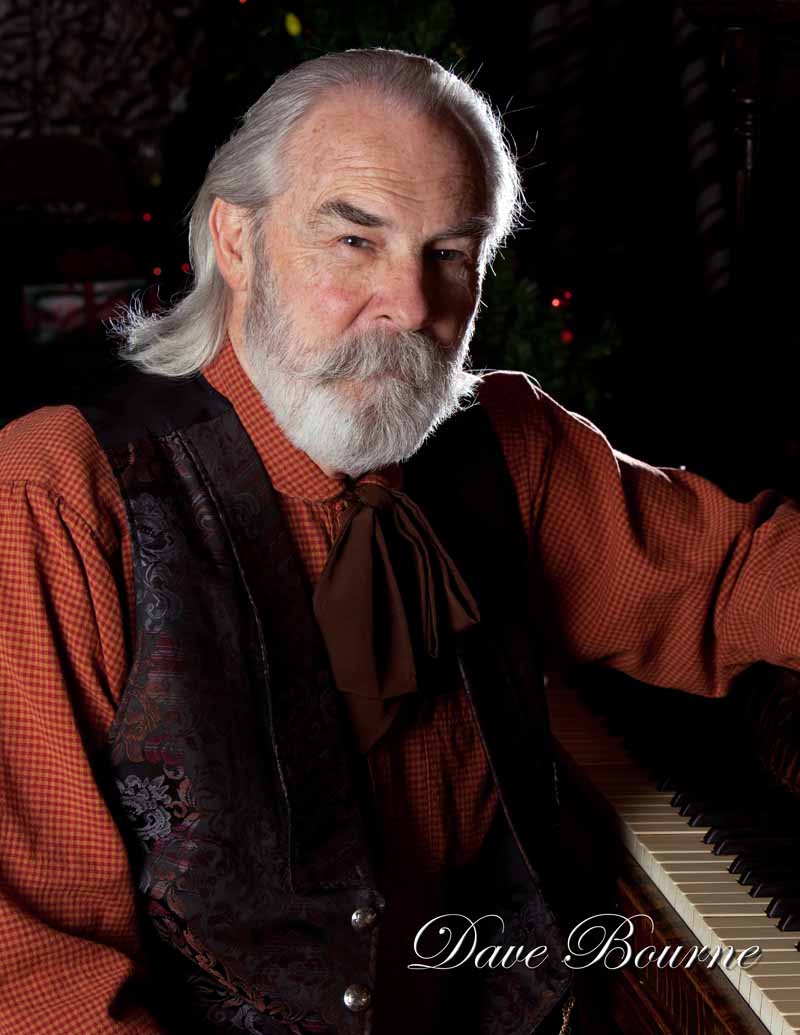
AHS Loses Hall of Famer Dave Bourne – Class of 1957

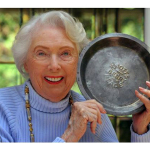
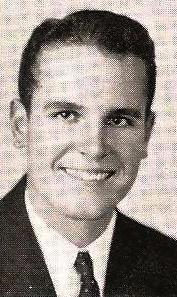
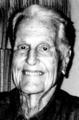
D. BourneDave Bourne comes by his musical talents naturally. His father Ted Bourne was the instrumental music instructor for 27 years for the Anaheim City School District which at that time included Fremont Junior High and five elementary schools. Dave started piano lessons at 6 years of age and his father taught him trumpet, trombone, baritone, and string bass.

Dave was in the last freshman class at AUHS and while there he encountered former vaudevillian Red Hamilton who introduced him to ragtime. Red worked for the school district as a piano tuner, stage manager, and maintenance man. Red was a great ragtime piano player who also played the banjo, drums, and cornet. Red’s great granddaughter is Gwen Stefani of the group No Doubt.
[Read more…]

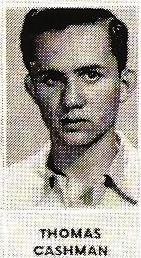
Thomas Cashman ’50 – Renowned Teacher & Author

THOMAS JOSEPH CASHMAN SR. – April 29, 1932 – Jan. 7, 2015.

Thomas Cashman Sr. of Anaheim Union High School Class of 1950, passed away Jan. 7,  at the age of 82. A Dana Point resident, Tom was born in Kansas City, Missouri, to John and Genevieve Cashman.

The family moved to California, settling in Anaheim where Tom attended local schools. He served his country in the US Air Force after leaving Anaheim High and became a Morse Code instructor.

He continued his education at CSU Los Angeles, where he majored in Education and Computer Science, paving his way to becoming a teacher and renowned author in the computer field.

He established one of the first business data processing programs in the nation at Long Beach City College, where he taught computer science for 33 years and served as department head. His first book on computer science was published by his own company. He later wrote for Thompson International Publishing of Toronto, Boston and London.

In 1969, he began collaborating with now best-selling author, Gary Shelly, to write more than 100 books on computer science that have sold over 20 million copies. His topics included Microsoft products, web design, business data communications, computer fundamentals and more.

Tom leaves behind his wife Merilyn Gentry and five of his seven children: Penelope, Timothy, Candice, Kristy and Todd. Tom was preceded in death by two sons; Ty Gabriel Cashman, in 1986 and Thomas Joseph Cashman, Jr., in 2011. He also leaves behind 15 grandchildren, 5 great-grandchildren, nieces, nephews and one sister, Caroline Michalik of Henderson, Nevada.

His service was held Jan. 13, 2015, at McAulay & Wallace Chapel in Fullerton. He was a member of St. Philip Benizi Catholic Church.THOMAS JOSEPH CASHMAN SR. 1950 Thomas Cashman 1950
Progress Made on Gymnasium Upgrades, New Score Board

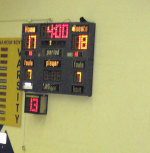
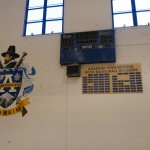
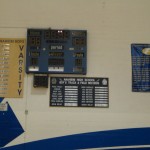
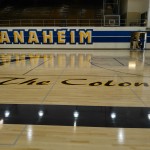
     A new gymnasium score board has been racking up the points for Colonist athletics thanks to generous donations from Anaheim High alumni, family and friends.

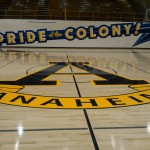
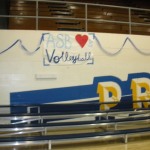
     The new wireless scoreboard was installed in time for the fall season of boys’ and girls’ basketball and volleyball. Floor-level bleachers were also in place, allowing an eye-level view from the new gym floor (see photo gallery below).

    The Anaheim High Gymnasium has been standing proud since 1936 and has served thousands of students and spectators. It survived a fire in the 1980s that caused damage to the floor and bleachers.

The improvements to the gym are making a significant improvement in the lives of today’s Colonist athletes, including the Girls’ Volleyball Team which recently won the Orange League title for the second consecutive year.

Thank you to our many donors, including:

Anaheim High School Alumni Association,  Anaheim High Breakfast Alumni, AHS Boys’ Basketball Booster Club, Paul Kott ’72, Minard Duncan ’50, Ronald Divini ’65, Kathryn Reesman ’73, and Roger Morales, Janice Christensen, , Wendy Mia, Paola Del Negro, Robert Peck, all Class of ’82.


Marion Knott – Class of ’39 – April ’22-Nov. ’14

Marion Knott, the youngest and last surviving child of Knott’s Berry Farm founders Walter and Cordelia Knott, has died at age 92. A graduate in 1939 of Anaheim Union High School, Marion was born in April 1922 on the Buena Park berry farm that would become Knott’s.
In the early days of the farm, Marion Knott was tasked with selling rhubarb at the side of the road. She also served as a waitress with her two sisters in the five-table tea room, where her mother prepared sandwiches, pie and coffee. When her mother introduced chicken dinners in the tea room in 1934, Marion Knott served those up, too.

As her parents aged, she and her three siblings (Virginia ’30, Russell ’33, Toni (Elizabeth) ’34) took over various management positions. Marion became director of design, planning and entertainment and was the one who persuaded the family to put up gates around the park and start charging admission in 1968.
In 1997, the family sold the park to Cedar Fair and Marion didn’t return to the park until 2009 to celebrate the 75th anniversary of Mrs. Knott’s Chicken Dinner Restaurant, where many Anaheim High students worked throughout their high school years and beyond.

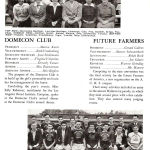
After graduating from Anaheim High, where she was a president of the Domecon Club and a member of Girl Reserves, as well as the girls’ golf team, she attended USC, leaving in her junior year to marry.
Marion was also a philanthropist and served on Chapman University’s Board of Trustees. The university’s film school, the Dodge College of Film and Media Arts, named its building Marion Knott Studios after she donated $5 million in 2004 to get it built and later kicked in another $3 million to fill the buildings with film equipment.

Marion Knott is survived by her husband, Anthony Montapert; her son, Darrel Anderson; her daughter, Diane; four grandchildren; and three great-grandchildren.


Colonist Royalty First Crowned for Patriotism

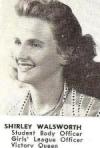
Shirley Walsworth GuardiaDid you know that the tradition of crowning a homecoming king and queen didn’t become popular at Anaheim High until the late 1940s?

The crowning of Colonist royalty first occurred in 1945 as part of a patriotic effort to raise funds for the war effort when Shirley (Walsworth) Guardia, a Class of ’46 graduate, earned the title of Victory Queen in her junior year.

In a letter written to the AHS Alumni Association, Shirley (now age 86) explained that the title of Victory Queen was the reward for raising money for a WWII victory bond drive. Students earned one vote for buying 10 Defense Stamps and 10 votes for buying a $25 War Bond.  Anaheim High raised $46,000 (today’s equivalent of more than $360,000).

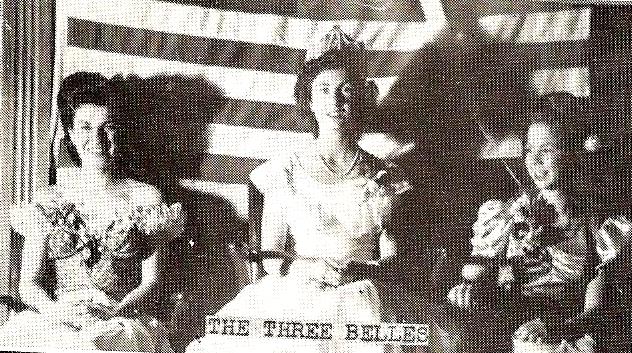
The Three Bells 1945“WWII was still going  in full force and the school wanted to show its patriotism by raising money to send to ‘the cause’ so they thought of having a contest for Victory Queen,” Shirley recalled.  “It was such a traumatic time with announcements every day of deaths in so many families and empty seats in many classrooms. We were just thinking of our boys on the battle front.”

By the time Teddy Lou Payne won the title the following year the war was nearly won and America had almost claimed victory at both fronts. Two months later, Warren Mackay was the first king of the campus, chosen for the March of Dimes Valentine Dance.

With the war over and lives getting back to normal, Colonist royalty was chosen for non-philanthropic reasons. In 1948, Arlene Anderson won the title of “Miss Slick Chick” as the first queen of the annual Anaheim Halloween celebration.

In 1947 and 1948, a king and queen were chosen for the Pigskin Ball, a post-football season event sponsored by the Anaheim High Anoranco Press Club. Jim Elam and Dolpha Underwood were ’47 royalty; Dick Golden and Paula Doretti, the ’48 selection.

Homecoming 1949 started a new tradition, that of homecoming queen. Chosen as the first homecoming queen was Class of ’50 Carol McDermott with a court of Betty Siems, Jeanene Sanders, Jackie Whiteman and Dorothy Mejia.


The rest is Colonist history!


(This is a rewrite of an previous article on the history of Colonist Royalty to ensure that facts are correct and Anaheim High’s history is accurate.)

Saluting WWII Hero Robert D. Fischle – Colonist Class of 1941

Robert Fischle as soilderFrom a hand-me-down 1927 Falcon roadster to an unique Army M-15 Half-Track, Robert D. Fischle’s journey from an Anaheim High graduate to World War II hero involved an amazing collection of unique cars, trucks and other vehicles that not only took him along the roads of life, but defined the path his life would take. Still living in Anaheim near his alma mater, Robert “Fish” Fischle shared his story of serving in WWII in his autobiography, “Small Town Kid to Big Time War.”

Before “Fish” writes about his experience as a soldier in WWII, including being a part of the Battle of the Bulge, one of the war’s most famous battles, he fondly recalls his years at Anaheim High. He entered Anaheim High after it was rebuilt due to damage from the 1933 Long Beach earthquake. “I was entering a new school that was almost complete except for the swimming pool and gym,” he writes.

These were innocent times when Bob enjoyed playing football, basketball and running track throughout his four years at AUHS. Like most boys, he was fascinated with cars. His first car during his years at Anaheim Union High School was a Willy’s roadster. When Bob “Fish” Fischle and his best buddy Bob Spielman came up with a quarter, they headed for to the nearest station to fill up on 10.9-cents- a-gallon-gas then headed the roadster to Huntington Beach. He traded in the hand-me-down in his senior year for a 1934 Ford V-8 convertible with roll-up windows and a rumble seat, purchased for $175 from the older brother of his best friend Bob Spielman.

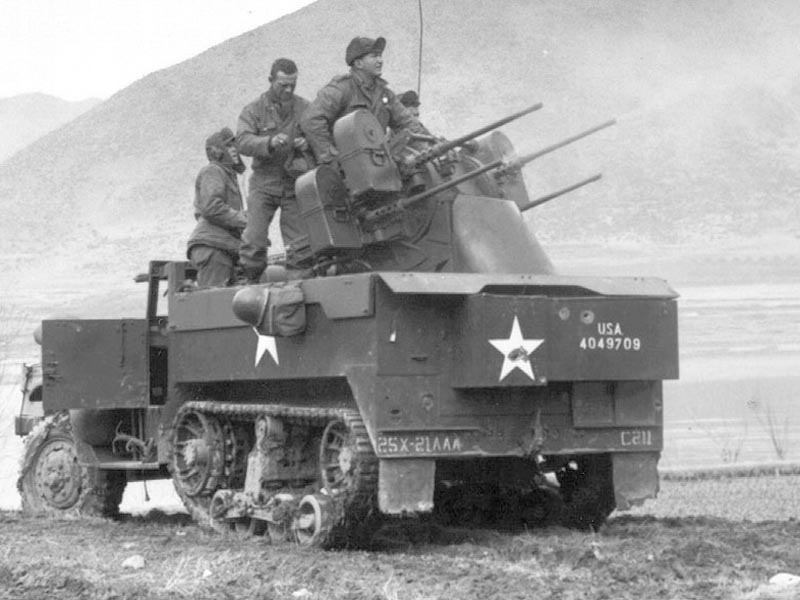
Little did Fischle know during this time of as an Anaheim teenager that life would change dramatically when the Japanese army attacked the Hawaiian Islands on Dec. 7, 1941. He would soon be serving as a gunner of one of the U.S. Army’s most unique vehicles –  a M-15 armored anti-aircraft half-track unit with two 50-caliber machine guns that fired 500 rounds per minute and a 37-millimeter canon that fired 120 rounds per minute.  The large truck-type vehicle was equipped with front wheels and rear tracks; thus the name half-track.half track

Robert received his draft notice Jan. 23, 1943, on his 19th birthday, as a student at Fullerton Junior College. Robert reported to Fort MacArthur in San Pedro. His training started at Camp Haan near March Air Force Base, then on to the Mohave Desert to Camp Irwin. He was assigned to the Elite 390th Special Battalion Unit of 675 soldiers. This special battalion was called the “AAA-AW-BN,” which stood for Anti-Aircraft Artillery-Automatic Weapons Battalion.

After a little more than one year of training, Robert’s battalion was shipping out on April 6, 1944 from Camp Shanks, New York, to Glasgow Harbor, Gureck, Scotland, assigned to fight in the Third Army commanded by General George Patton. From June 29, 1944, to his date of discharge four years later, Robert traveled with his Battalion from Scotland, through England, France, Luxembourg, Germany, Czechoslovakia and Austria.

On July 7, 1944, the 390th Battalion landed on Utah Beach with the mission to protect the Third Army’s supply dumps. As they began their advance across Europe, the main objective was to shut down enemy aircraft to prevent destruction of bridges. Keeping these structures intact was of vital importance to the success of U.S. Army operations. “We advanced day and night, over mountains, through dense forests, across broad rivers, pressing ever onward in pursuit of victory,” Robert recalls in his memoirs.

Their 281-day campaign culminated with an important appearance in the Battle of the Bulge, the last major engagement of the United States in the European theater. This 40-day battle, fought in Belgium from Dec. 16, 1944 through Jan. 25, 1945 in the freezing cold, was the largest and bloodiest battle Americans fought in World War II, extending across 90 miles of front, leaving 90,000 Americans wounded and 19,000 dead.

The 390th made history during the Battle of the Bulge, shooting down 13 German planes in 17 minutes. The Germans were in retreat and it was over for the Nazi party and Hitler’s black-coated “SS” troops, also known as the Nazi elite. The 390th Battalion received commendations from U.S. Army General George Patton, General Dwight D. Eisenhower, General Marshall, General Bradley and many more.

The end of March 1945 was the beginning of what has been called the “Rat Race” to Germany. On April 30, 1945, Hitler committed suicide along with his wife of one day, Eva Braun, his mistress of many years; thus, ending the Third Reich and which surrender unconditionally on May 8, 1945.

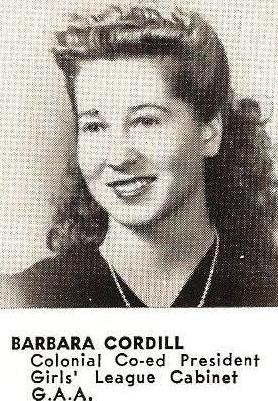
Barbara Cordill 1944After the war ended, Robert returned to Anaheim and married Barbara Cordill, Class of 1944. Barbara passed away Nov. 4, 2014, at age 87.

We of the Anaheim High School Alumni Association salute the Anaheim-born Colonist hero.

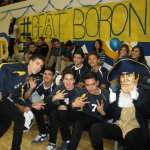
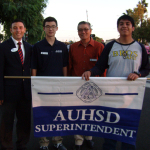
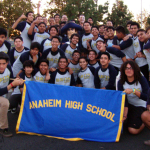
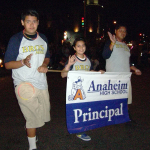
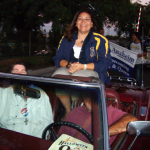
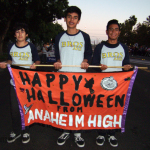
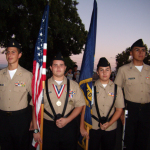
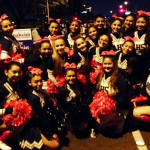
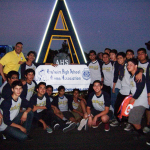
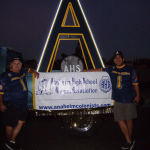
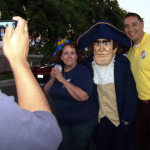
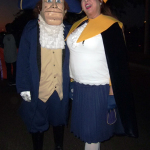
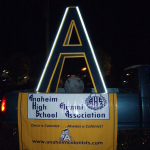
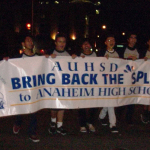
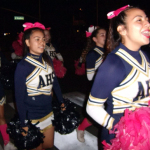
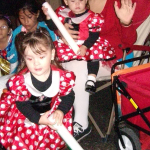
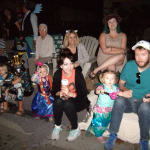
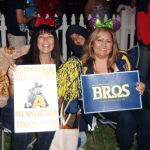
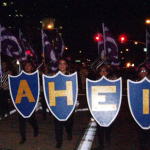
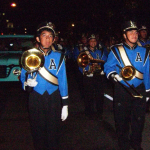
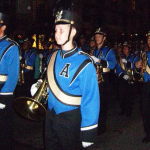
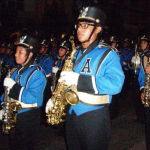
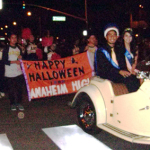
Anaheim High Celebrates 90th Halloween Parade

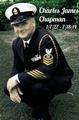
CHARLES JAMES (JIM) CHAPMAN – 1927 – 2014

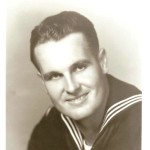
CHAPMAN, JIM CLASS OF 1945  Charles James (Jim) Chapman, AUHS Class of 1945, passed away July 18, 2014, of natural causes at his home in Anaheim at the age of 87. Jim was born in Sigourney, Iowa on Jan. 7, 1927. Tired of shoveling snow in Iowa, he moved with his family to Anaheim in 1941.

At age 16, he joined the US Navy where he would spend the next 30 years of his life serving in WW II, the Korean Conflict, and the Vietnam War. His chosen area of Naval service was a Boatswains Mate, one of the oldest and most distinguished rates in the Navy. This rate, however, kept Jim away from his family much of the time, as it was a shipboard deck position so he worked hard and rose to the rate of Senior Chief Boatswain’s Mate, the highest rate in the Navy without being an officer. He was also a Company Commander in San Diego at the Naval Training Center, training young sailors in boot camp and worked as Shore Patrol in Long Beach. After his Naval service and military retirement in 1972, Jim got his real estate and broker’s license and spent the rest of his life in the Orange County area listing and selling property.

In 1948, he married the love of his life Phyllis Ruth (Petey) Hill, also an Anaheim High graduate. They would have been married 66 years on July 21. Jim is survived by his wife, Phyllis; son Mark Chapman of San Clemente and his wife Diane; daughter, Tracie Keough of Yorba Linda and her husband Tom; and his grandson, Mark Keough, also of Yorba Linda. For his last and final deployment, Jim will be buried at sea with full military honors.


Anaheim High Class of ’29 Triplets a Unique Part of Colony History

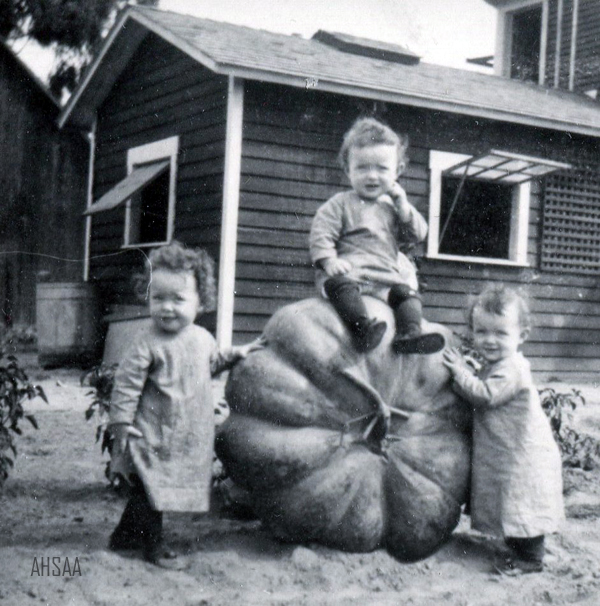
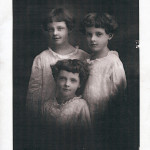
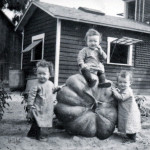
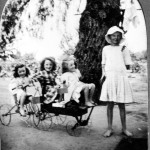
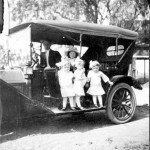
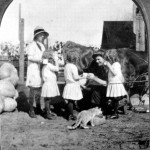
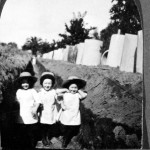
Triplets on pumpkin017Among Anaheim Colony pioneers were the famous Bever triplets, Orena, Reona and Ramona, the city’s first set of triplets.

Born Aug. 9, 1910 to Miles and Anna Bever, the triplets rounded off a family of four girls, including older sister Rose.

At birth, two weighed 5 pounds, 12 ounces; the third was 4 pounds, 8 ounces. A newspaper article announcing their birth stated, “They are all apparently well and sound and the mother is doing nicely.”

Their father was a rancher and architect in partnership with Leslie R. Wilson. Their construction company built many residential and commercial buildings in Anaheim, including the Kraemer Building, Anaheim City Hall (1923-1980), Angelina Hotel and the S.Q.R. Department Store.

On a side note: The six-story Kramer Building, erected on the corner of Center (now Lincoln Street) and Claudina streets at the cost of $300,000, was billed as a “skyscraper” and was, at the time, the tallest and costliest building in Orange County. The ground floor was occupied by American Savings Bank and the other stories were divided into offices occupied by local businessmen.

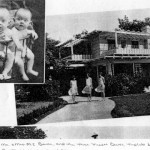
Records on file at the Anaheim Heritage Center show that the family owned a vineyard lot at 143 S. Ohio. They later lived in another home located at Chestnut and Lemon.

Class of 1929 Anaheim High graduates, all three girls were active in school. Orena was on the Girls’ League cabinet and on the yearbook staff. Reona was a member of the Art Club, Hi-Jinx, and the Girls’ Athletic Association, playing varsity hockey, basketball and baseball. Ramona was a member of the yearbook staff, Hi-Jinx, Art Club and served as treasurer of her sophomore class.

The triplets worked at the Henry Bros Drug Stores and were related to the store’s owner, according to documents on file at the Anaheim Heritage Center. One store was located at Palm and Center (now Harbor and Lincoln) and a second store at Lemon and Center Street (now Lincoln).

All three girls married and became Orena Daughtery, living in Long Beach and Bellflower; Ramona Jordan of Whittier and Anaheim; and Reona Bryan of Anaheim. Their older sister Rose Keller lived in Long Beach and Chino. Ramona had three daughter: Patsy, Joan (Class of ’44) and Marcella (Class of ’42).

An obit was on file only for Reona. She passed away of natural causes on Dec. 30, 1982, in Anaheim, her life-long home.

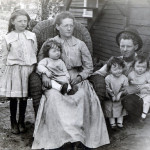
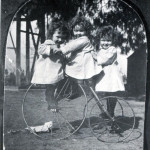
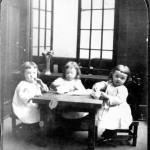
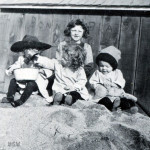
Photos of the girls and their family show a set of cherubic children always wearing matching dresses and engaging smiles. These Anaheim High graduates are certainly a unique piece of Colony history.


Raymond Gerald Baker – 1918 – 2014

Gerald Baker grad photo

RAYMOND GERALD BAKER
July 30, 1918 – June 18, 2014

Gerald Baker, an AUHS Class of ’36 grad, was born to James A. and MaeBelle Baker on their citrus ranch located on West Broadway near Magnolia St. in Anaheim. He attended Magnolia Elementary School (now Maxwell) where Mattie Lou Maxwell was his teacher and coach.

Gerald married Eleanor Becker in 1939 and they celebrated 55 years of marriage before Eleanor’s passing in 1994.

During World War II, Gerald served in the U.S. Navy and was deployed to the Pacific Fleet, serving on a Minesweeper. He was severely wounded when the ship was sunk near Borneo and was presented The Purple Heart.

Gerald worked for most of his adult life on Signal Hill, Long Beach, in various positions with the oil industry. He was a lifelong member of the Anaheim Christian Church where he served on the Board, taught Sunday school and sang in the choir.

A life-long resident of Anaheim, Gerald came from a family of Colonists. His father, James Baker is an Anaheim graduated who taught at Centralia Elementary in Anaheim in 1912, became the first Superintendent of Schools for the La Habra district and served as an Orange County Supervisor.

Gerald’s uncle Arthur was in Anaheim’s second graduating class (1902), and three of Gerald’s siblings graduated from Anaheim, as did his wife, Eleanor Becker (1937), and their sons, John (1958) and Bob (1959).

(Incidentally, Gerald’s mother, Mae Belle Dickenson Baker, who attended but didn’t graduate from AHS, had a sister who married John King, the writer of Anaheim ’s alma mater.)

While at Anaheim High, Gerald served was senior class vice president, ran track, played baseball, acted in school plays and sang in the Mozart Choir and Boys’ Quartet.

Gerald was preceded in death by his wife, Eleanor and son, John Edward. He is survived by son, Robert Paul; daughter-in-law, Charlene; seven grandchildren and sixteen great grandchildren.

Gerald was a kind gentleman, faithful to God, his family and country; he will be greatly missed by all who love him!